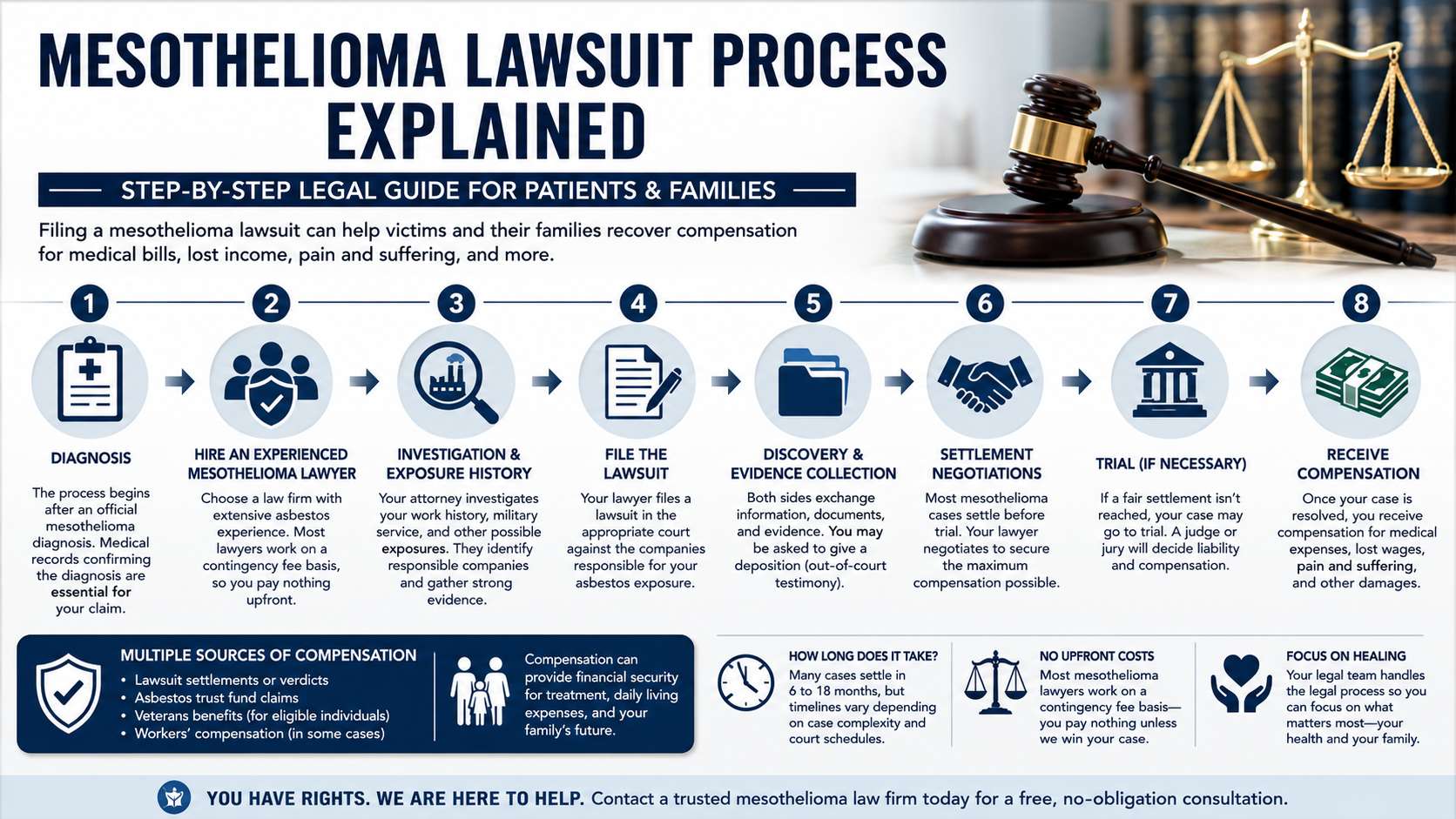
A mesothelioma diagnosis can be one of the most overwhelming experiences a person and their family will ever face. In addition to the emotional and physical challenges caused by this aggressive cancer, many patients must also deal with mounting medical expenses, lost income, and uncertainty about the future. Because mesothelioma is almost always linked to asbestos exposure, victims in the United States often have the legal right to pursue compensation from the companies responsible for exposing them to asbestos-containing products.
For many families, however, the legal process can feel confusing and intimidating at first. Questions about how lawsuits work, how long cases take, what evidence is needed, and how compensation is awarded are extremely common. The good news is that experienced mesothelioma lawyers handle most of the legal work on behalf of patients, allowing families to focus on treatment and time together. Understanding the step-by-step mesothelioma lawsuit process can help victims feel more prepared and confident when deciding whether to pursue legal action in 2026.
Mesothelioma lawsuits are unique compared to other personal injury claims because asbestos exposure often happened decades before diagnosis. Successful cases require extensive investigation into work history, military service, asbestos-containing products, medical evidence, and corporate negligence. Despite these complexities, many victims successfully recover significant compensation through settlements, trust fund claims, or trial verdicts. (asbestos.com)
Step 1: Receiving a Mesothelioma Diagnosis
The legal process usually begins shortly after a patient receives an official mesothelioma diagnosis from a medical professional. Since mesothelioma symptoms often resemble other respiratory illnesses, diagnosis may involve multiple tests including imaging scans, biopsies, pathology reports, and specialist evaluations. Once mesothelioma is confirmed, patients and families often begin exploring legal options to help cover treatment costs and financial losses.
Medical documentation is one of the most important pieces of evidence in a mesothelioma case. Attorneys use pathology reports, imaging results, physician records, and treatment plans to establish the severity of the illness and confirm its connection to asbestos exposure. Because mesothelioma is widely recognized as an asbestos-related disease, medical evidence strongly supports legal claims against asbestos manufacturers and employers.
At this stage, families are also encouraged to begin collecting employment history, military records, union membership information, and any documents related to past workplaces where asbestos exposure may have occurred. Even if patients cannot remember every exposure detail, experienced mesothelioma lawyers often have access to asbestos databases that help identify likely sources of exposure. (mesothelioma.com)
Step 2: Hiring an Experienced Mesothelioma Lawyer
Choosing the right lawyer is one of the most important decisions in the entire process. Mesothelioma litigation is highly specialized, and victims should look for attorneys with extensive experience handling asbestos cases specifically rather than general personal injury claims.
Top mesothelioma law firms typically offer free consultations where attorneys review the diagnosis, discuss possible exposure history, and explain legal options. During this consultation, lawyers evaluate whether the patient qualifies for lawsuits, asbestos trust fund claims, veterans benefits, or other forms of compensation.
Most mesothelioma attorneys work on a contingency fee basis, meaning clients pay no upfront legal fees. The lawyer only receives payment if compensation is successfully recovered through a settlement or verdict. This arrangement allows families to pursue justice without adding additional financial pressure during treatment. (asbestos.com)
Experienced attorneys also provide guidance about filing deadlines known as statutes of limitations. Each state has different legal deadlines for mesothelioma claims, and waiting too long could prevent victims from filing lawsuits entirely. Because of this, families are encouraged to contact a lawyer as soon as possible after diagnosis.
Step 3: Investigating Asbestos Exposure History
After hiring a lawyer, one of the first major steps is conducting a detailed investigation into the patient’s asbestos exposure history. Since mesothelioma may develop 20 to 50 years after exposure, this part of the process often requires extensive research.
Attorneys work closely with clients to review employment records, military service history, residential exposure, and secondary exposure situations. Secondary exposure occurs when family members inhale asbestos fibers brought home on work clothing.
Law firms often use specialized asbestos databases containing information about factories, shipyards, construction sites, industrial plants, military bases, and asbestos-containing products used throughout the United States. These databases help lawyers identify the companies responsible for manufacturing or supplying asbestos materials.
During the investigation phase, attorneys may also interview coworkers, union representatives, or witnesses who can confirm asbestos exposure. Strong exposure evidence is critical because it connects the diagnosis directly to specific companies and products. (mesothelioma.com)
Step 4: Filing the Mesothelioma Lawsuit
Once enough evidence has been gathered, the attorney formally files the mesothelioma lawsuit in court. The lawsuit identifies the companies believed to be responsible for the asbestos exposure and outlines the damages suffered by the victim.
Choosing where to file the lawsuit is an important strategic decision. In some cases, lawsuits are filed in states different from where the patient currently lives because certain courts have more favorable asbestos litigation histories or faster legal procedures.
The lawsuit generally includes claims for medical expenses, lost wages, pain and suffering, future treatment costs, emotional distress, and loss of companionship for family members. If the victim has passed away, surviving relatives may file a wrongful death lawsuit seeking compensation for funeral expenses and loss of financial support. (asbestos.com)
After filing, the defendant companies receive formal notice and have a limited period to respond. Some companies may deny responsibility initially, while others may begin discussing settlement negotiations relatively quickly.
Step 5: Discovery Phase and Evidence Collection
The discovery phase is one of the most important parts of the lawsuit process. During discovery, both sides exchange evidence, documents, witness information, and legal arguments related to the case.
Attorneys may request internal corporate documents showing that asbestos companies knew about the dangers of asbestos exposure for decades but failed to warn workers or consumers. Historical evidence demonstrating negligence often strengthens the victim’s case significantly.
Patients may also participate in depositions, which are sworn interviews conducted outside of court. During a deposition, lawyers ask questions about work history, asbestos exposure, medical diagnosis, and how the illness has affected daily life. Because mesothelioma patients may be seriously ill, courts often allow expedited depositions to preserve testimony early in the case.
Medical experts, occupational specialists, economists, and asbestos researchers may also provide expert opinions supporting the victim’s claim. These experts help explain how asbestos exposure caused mesothelioma and estimate the financial impact of the disease on the family. (mesothelioma.com)
Step 6: Settlement Negotiations
Most mesothelioma lawsuits in the United States are resolved through settlements rather than trials. Settlements occur when defendant companies agree to pay compensation without continuing the case in court.
Settlement negotiations may begin at almost any stage of the legal process. In many cases, asbestos companies prefer settling because jury verdicts can result in much higher payouts and negative publicity. Settlements also allow victims to receive compensation more quickly than waiting for a trial decision.
The amount of compensation depends on several factors including the severity of the illness, medical expenses, lost income, strength of exposure evidence, number of companies involved, and the victim’s age and family situation.
Many mesothelioma settlements reportedly range between $1 million and $2 million in 2026, although some cases settle for much higher amounts depending on the circumstances. (mesothelioma-lung-cancer.org)
Experienced mesothelioma lawyers negotiate aggressively to maximize compensation while helping families avoid unnecessary delays.
Step 7: Trial (If No Settlement Is Reached)
If settlement negotiations fail, the lawsuit may proceed to trial. Although only a small percentage of mesothelioma cases reach this stage, trials can result in extremely large verdicts.
During the trial, attorneys present evidence before a judge or jury, including medical records, exposure history, witness testimony, expert opinions, and corporate documents. The jury then decides whether the defendants are legally responsible and determines the amount of compensation owed.
Mesothelioma trial verdicts can sometimes exceed tens of millions of dollars, especially when evidence shows companies knowingly exposed workers to asbestos dangers. However, trials also involve uncertainty, appeals, and longer timelines compared to settlements. (asbestos.com)
Because of these risks, many families choose settlements instead of pursuing lengthy courtroom battles.
Step 8: Receiving Compensation
Once a settlement or verdict is finalized, victims begin receiving compensation. Payment timelines vary depending on the agreement, number of defendants, and whether appeals are involved.
Compensation may come from multiple sources including lawsuit settlements, asbestos trust funds, veterans benefits, and workers’ compensation programs. Many victims qualify for compensation from several asbestos companies simultaneously.
Settlement funds are often used to cover treatment costs, travel expenses, home care, lost wages, funeral expenses, and financial support for surviving family members. In most cases, compensation for physical injuries is not taxable under federal law, though some portions such as punitive damages may be taxable in certain situations. (irs.gov)
How Long Does the Mesothelioma Lawsuit Process Take?
The timeline for mesothelioma lawsuits varies widely depending on the complexity of the case and whether it settles or goes to trial. Some cases settle within a few months, while others may take one to two years or longer.
Because mesothelioma is an aggressive disease, many courts prioritize asbestos cases and allow expedited scheduling for seriously ill patients. Trust fund claims may move even faster than traditional lawsuits, sometimes paying compensation within several months.
Experienced mesothelioma attorneys work to resolve cases as quickly as possible while still pursuing maximum compensation for the victim and family.
Final Thoughts
The mesothelioma lawsuit process may seem overwhelming at first, but experienced asbestos lawyers guide families through each step while handling most of the legal burden themselves. From investigating exposure history and filing claims to negotiating settlements and pursuing compensation, every stage of the process is designed to help victims secure financial support and hold asbestos companies accountable.
In 2026, thousands of mesothelioma patients across the United States continue to recover substantial compensation through lawsuits and asbestos trust funds. While no legal outcome can erase the pain caused by mesothelioma, successful claims can provide critical financial relief, help cover medical expenses, and protect the future of surviving family members.
For families facing a mesothelioma diagnosis, speaking with an experienced attorney as early as possible can make an enormous difference in both the legal process and the final compensation outcome.