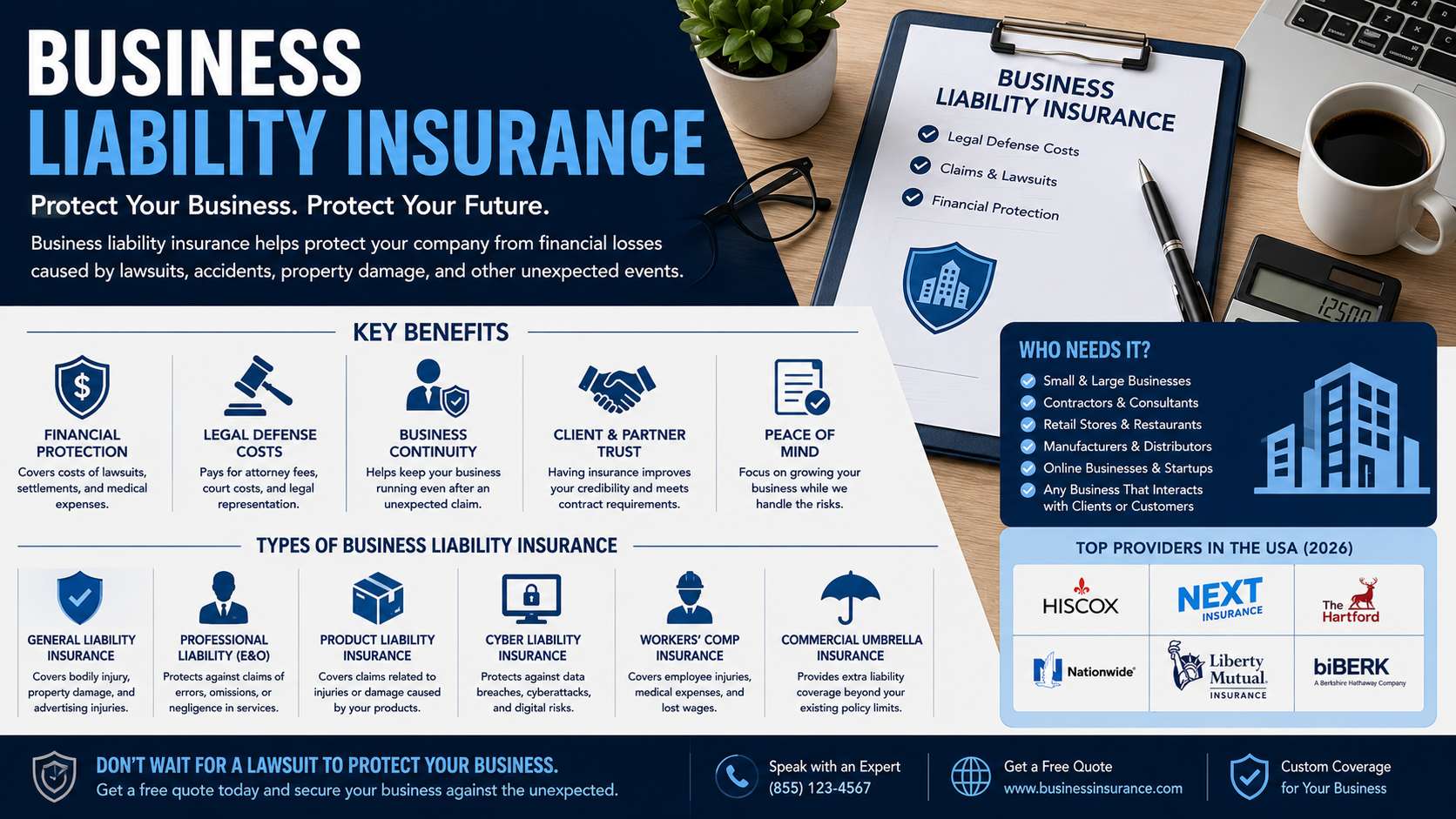
Running a business in the United States comes with financial opportunities, but it also involves serious risks. Even successful businesses can face lawsuits, customer injuries, employee accidents, property damage claims, advertising disputes, or cyberattacks. A single lawsuit can cost thousands — or even millions — of dollars in legal fees, settlements, and damages. That is why business liability insurance has become one of the most important forms of protection for companies in 2026.
Business liability insurance helps protect companies from financial losses caused by accidents, negligence claims, lawsuits, and other unexpected events related to daily operations. Whether you own a small local business, an online store, a construction company, a consulting agency, or a large corporation, liability coverage can help safeguard your assets and keep your business operating after legal or financial challenges.
In today’s business environment, clients, landlords, vendors, and contractors often require proof of insurance before signing agreements or contracts. Many industries also face increasing legal and cyber risks, making insurance coverage more important than ever. Understanding how business liability insurance works, what it covers, and how to choose the right policy can help business owners make smarter financial decisions and reduce long-term risk.
What Is Business Liability Insurance?
Business liability insurance is a type of commercial insurance designed to protect companies from legal claims and financial losses related to business activities. It helps cover costs such as lawsuits, medical bills, legal defense fees, settlements, property damage, and other expenses that may arise if the business is found legally responsible for injuries or damages.
Without liability insurance, a company may have to pay these costs entirely out of pocket. For small businesses especially, even one major lawsuit could lead to bankruptcy or permanent closure. Liability insurance acts as a financial safety net, allowing businesses to continue operating while protecting owners from devastating financial losses.
Most business liability policies are customized based on the company’s industry, size, risk level, revenue, and operational needs. In 2026, businesses increasingly combine multiple forms of liability protection to cover modern risks such as cybercrime, professional errors, and data breaches in addition to traditional physical injury claims.
Why Business Liability Insurance Is Important
Many business owners assume lawsuits only happen to large corporations, but small businesses face legal risks every day. A customer slipping on a wet floor, an employee accidentally damaging client property, or a consultant making a professional mistake can quickly result in expensive claims.
Business liability insurance helps companies:
- Protect financial assets
- Cover attorney and court fees
- Pay settlements or judgments
- Maintain professional credibility
- Meet contract requirements
- Reduce operational risk
- Continue operating after accidents or lawsuits
In many industries, liability insurance is also legally or contractually required. Landlords often require coverage before leasing commercial space, and clients may request certificates of insurance before working with contractors or service providers.
Additionally, business liability coverage can improve customer trust because it demonstrates professionalism and financial responsibility.
Types of Business Liability Insurance
There are several different types of business liability insurance available in the United States. The right combination depends on the specific risks associated with the business.
General Liability Insurance
General liability insurance is the most common and essential type of business coverage. It protects businesses against claims involving bodily injury, property damage, and advertising-related issues.
For example, if a customer slips and falls inside a retail store, general liability insurance may help cover medical expenses, legal costs, and settlement payments. It may also protect against accidental property damage caused during business operations.
Most small businesses begin with general liability insurance because it provides broad protection against common lawsuits and claims.
Popular providers offering general liability coverage include:
Professional Liability Insurance
Professional liability insurance, also known as Errors and Omissions (E&O) insurance, protects businesses that provide professional services or advice. This coverage is especially important for consultants, lawyers, accountants, architects, real estate agents, and IT professionals.
Professional liability insurance may cover:
- Professional negligence claims
- Errors in services provided
- Missed deadlines
- Misrepresentation claims
- Legal defense expenses
For example, if a consultant provides advice that leads to financial losses for a client, the client may file a lawsuit alleging professional negligence. E&O insurance can help cover legal costs and potential settlements.
As service-based industries continue expanding in 2026, professional liability coverage has become increasingly important for freelancers and remote businesses as well.
Product Liability Insurance
Businesses that manufacture, distribute, or sell physical products may need product liability insurance. This type of coverage protects against claims that a product caused injury, illness, or property damage.
For example, if a defective electronic device catches fire or a food product causes illness, product liability insurance may help cover lawsuits and compensation claims.
Product liability coverage is especially important for:
- Manufacturers
- Retailers
- E-commerce businesses
- Food companies
- Beauty and cosmetic brands
- Consumer electronics sellers
As online shopping continues growing across the United States, product liability risks for e-commerce sellers have increased significantly.
Cyber Liability Insurance
Cyber liability insurance has become one of the fastest-growing areas of commercial insurance in 2026. Businesses of all sizes face increasing risks from cyberattacks, ransomware, phishing scams, and data breaches.
Cyber liability coverage may help businesses recover from:
- Data breaches
- Customer information theft
- Hacking incidents
- Ransomware attacks
- Business interruption losses
- Regulatory fines
- Legal claims related to cybersecurity failures
Even small businesses are frequently targeted because hackers often assume they have weaker security systems than large corporations.
Major cyber insurance providers include:
Businesses handling customer payment information, healthcare records, or sensitive financial data should strongly consider cyber liability coverage.
Workers’ Compensation Insurance
Workers’ compensation insurance is legally required in most U.S. states for businesses with employees. It provides financial support if employees are injured or become ill because of work-related activities.
Coverage typically includes:
- Medical expenses
- Lost wages
- Rehabilitation costs
- Disability benefits
- Death benefits for families
Workers’ compensation not only protects employees but also helps businesses avoid costly workplace injury lawsuits.
Industries such as construction, manufacturing, transportation, and warehousing often face higher workers’ compensation costs due to increased injury risks.
Commercial Umbrella Insurance
Commercial umbrella insurance provides extra protection above the limits of existing liability policies. If a claim exceeds the limits of general liability or auto insurance, umbrella coverage may pay the remaining costs.
For example:
- A lawsuit results in $2 million in damages
- General liability insurance covers only $1 million
- Umbrella insurance may cover the remaining $1 million
Large businesses and companies with significant public exposure often use umbrella insurance for added protection against catastrophic claims.
How Much Business Liability Insurance Costs in 2026
Business liability insurance costs vary based on several factors including:
- Business type
- Industry risk level
- Company size
- Annual revenue
- Number of employees
- Claims history
- Coverage limits
- Business location
Average estimates in the United States for 2026 include:
- Small businesses: approximately $40 to $150 per month
- Medium-sized companies: $200 to $1,000+ monthly
- High-risk industries: significantly higher premiums
Construction companies, trucking businesses, healthcare providers, and manufacturing operations usually pay more because of greater liability risks.
Businesses can often reduce premiums by improving workplace safety, strengthening cybersecurity systems, and bundling policies together.
How to Choose the Right Business Liability Insurance
Selecting the right insurance policy requires careful evaluation of business risks and operational needs. Business owners should begin by identifying their biggest liability exposures.
Questions to consider include:
- Does the business interact with customers in person?
- Are professional services or advice provided?
- Does the company sell physical products?
- Are employees exposed to workplace hazards?
- Is customer data stored digitally?
- Are large contracts or commercial properties involved?
Business owners should compare quotes from multiple insurers and review policy exclusions carefully. The cheapest policy may not always provide adequate protection.
Working with a licensed commercial insurance agent can help businesses understand coverage limits, deductibles, and industry-specific risks more effectively.
Top business insurance companies in 2026 include:
Common Business Liability Insurance Mistakes
One common mistake is assuming a homeowners insurance policy covers home-based business activities. In many cases, personal insurance excludes business-related claims entirely.
Another mistake is purchasing minimal coverage limits that may not fully protect against large lawsuits. Businesses should regularly review policies as operations grow or risks change.
Failing to disclose accurate business information can also lead to denied claims later. Honesty during the application process is critical for proper protection.
Businesses should also update coverage after hiring employees, expanding services, opening new locations, or launching online operations.
Final Thoughts
Business liability insurance is one of the most important investments a company can make in 2026. From customer injuries and professional mistakes to cyberattacks and employee accidents, businesses face legal and financial risks every day. The right insurance coverage can protect assets, reduce financial stress, and help companies survive unexpected lawsuits or claims.
Whether you operate a small startup, online business, consulting agency, retail store, or large corporation, understanding your liability risks is essential for long-term success. By choosing the right combination of coverage and working with reputable insurance providers, businesses can build stronger financial security and operate with greater confidence in today’s competitive market.